Tag Archives: Artist

Art Is How We Learn: The Teaching Philosophy of Mr. Sabino

Introduction: Art Is Not Just a Class

For Mr. Georgio Sabino III, art education is much more than teaching students how to draw, paint, sculpt, photograph, design, or create. Art is a way of thinking. It is a way of communicating, questioning, experimenting, solving problems, understanding people, and understanding ourselves.

From kindergarten through college, Mr. Sabino approaches the art classroom as a laboratory for creativity. Students are not simply asked to produce a beautiful picture. They are challenged to ask questions:

What do I see? What do I feel? What do I want others to understand? What problem am I trying to solve? What happens if I try something different?

This philosophy is rooted in a simple belief: every student has the capacity to be creative. Creativity is not reserved for the student who already knows how to draw. It can be developed through practice, experimentation, participation, failure, reflection, and trying again.

Mr. Sabino often tells his students:

“You cannot make a mistake; you make it better.”

That statement changes the atmosphere of the classroom. Instead of being afraid of getting the answer wrong, students are encouraged to explore. Instead of seeing an unexpected mark as failure, they learn to ask how that mark might become part of the artwork.

He also tells students:

“Your artwork with a mistake is worth more money.”

Behind the humor is an important lesson: originality, process, history, and evidence of human decision-making can give an artwork meaning. The goal is not perfection. The goal is discovery.


Art and Creativity Belong Together

Art and creativity are inseparable, but creativity itself extends far beyond traditional art materials.

A student demonstrates creativity when designing a painting, but also when developing a scientific experiment, solving a mathematical problem, writing a story, building a robot, creating an argument in history, designing clothing, preparing food, developing software, or finding a new way to communicate an idea.

This is why art belongs in a complete education.

The National Core Arts Standards identify artistic processes that include Creating, Presenting, Responding, and Connecting. These processes reinforce the idea that students do not simply make things; they generate ideas, develop work, interpret meaning, communicate with audiences, and connect artistic experiences to their lives and the world around them.

The National Core Arts Standards can therefore support an interdisciplinary approach in which art is not isolated from other subjects. Art becomes one of the ways students learn how knowledge connects.


History Helps Us Understand Where We Came From

History gives students a foundation for understanding the past.

Artists have always responded to historical events, political movements, cultural traditions, migration, war, religion, technology, social change, and everyday life. A painting, photograph, sculpture, building, garment, poster, or song can become historical evidence.

When students study art from another period, they are not simply looking at an image. They are asking:

  • Who made this?
  • Why was it made?
  • Who was the intended audience?
  • What was happening in society?
  • What values does the artwork communicate?
  • What does the artwork tell us about the people who created it?

Art gives history a human face.

A student studying the Civil Rights Movement, for example, can examine photographs, protest posters, murals, music, fashion, graphic design, and public art to understand how people communicated ideas and created movements.

History provides the context.

Art gives students another way to see it.


Science Teaches Us to Explore

Science and art share something fundamental: curiosity.

A scientist asks a question, develops a hypothesis, tests an idea, observes what happens, analyzes results, and tries again.

Artists do something remarkably similar.

An artist may ask:

What happens if I mix these colors?

What happens if I change the composition?

What happens if I photograph this object from another perspective?

What happens if I combine materials?

What happens if I completely change my original idea?

The answer may not be what the student expected.

That is not necessarily failure.

It is information.

Mr. Sabino uses experimentation to help students understand that creativity can be developed. Students learn by trying, observing, adjusting, and trying again.

In this sense, the art classroom becomes a creative laboratory.


Chemistry Helps Us Understand What Things Are Made Of

Chemistry can explain why materials behave the way they do.

Artists work with materials constantly.

Paint contains pigments and binders. Clay changes when fired. Metals react to heat. Photography depends upon chemical and technological processes. Textiles involve fibers, dyes, treatments, and manufacturing processes.

A student working with color can learn that color is not simply an artistic concept. It also involves light, reflection, absorption, pigments, and material properties.

The artist asks:

What can I make?

Chemistry can help answer:

What is this material doing, and why?

Together, the disciplines create deeper understanding.


Mathematics Helps Us Explain Structure

Mathematics provides artists with systems for understanding proportion, scale, measurement, symmetry, geometry, perspective, pattern, rhythm, repetition, and spatial relationships.

Architecture depends upon mathematics.

Fashion depends upon measurement.

Photography uses proportions and geometry.

Graphic design relies upon grids and spatial relationships.

Sculpture requires understanding dimensions and scale.

Even a simple drawing involves relationships between shapes, distances, angles, and space.

Students can discover that mathematics is not merely a collection of numbers. Mathematics can describe the visual world.

The artist sees a composition.

The mathematician can help explain its structure.


English Language Arts Helps Us Say What We Mean

Art communicates without always using traditional sentences, but artists still need language.

Students must be able to describe their ideas, explain their choices, write artist statements, critique artwork, discuss symbolism, interpret visual information, and communicate with an audience.

A student may create a powerful painting but struggle to explain what it means.

Art education gives that student an opportunity to develop both visual and verbal communication.

Poetry is especially powerful because it demonstrates that words themselves can become artistic materials.

A poem can create an image.

An image can tell a story.

A photograph can communicate an emotion.

A sculpture can represent an idea.

Students begin to understand that communication exists in many forms.


Technology and Computer Science Expand the Artist’s Toolbox

Today’s artist may use a pencil, a camera, a sewing machine, a 3D printer, artificial intelligence, animation software, virtual reality, digital photography, video, coding, or graphic-design software.

Technology does not eliminate creativity.

It expands the number of tools available to creative thinkers.

Students can learn that coding itself is creative problem-solving. A programmer develops a concept, tests it, discovers errors, revises the code, and tries again.

That is also the artistic process.

Create. Test. Evaluate. Revise. Try again.


Fashion Shows That Creativity Is Everywhere

Mr. Sabino’s understanding of art extends into fashion and personal expression.

He teaches students that being an artist does not only happen when someone sits down to draw.

“Being an artist happens in the way you speak, the way you think, the way you walk, the way you look, and the way you express yourself.”

A person can communicate through clothing, posture, hairstyle, movement, music, photography, architecture, graphic design, or the way they arrange their environment.

Someone walking down the street may be making creative choices without realizing it.

The colors they wear.

The shoes they select.

The way they combine patterns.

The way they style their hair.

The way they move.

The way they present themselves.

All of these choices can become forms of visual communication.

Fashion demonstrates that design is not something that only exists inside an art classroom.

We design ourselves every day.


Art Can Solve Real-World Problems

Art education should not be limited to expression.

Art can also be practical.

Designers solve problems.

Architects solve problems.

Photographers solve communication problems.

Fashion designers solve problems involving movement, identity, materials, function, and culture.

Industrial designers create products.

Graphic designers organize information.

Artists can help communities imagine new possibilities.

Students can use creative thinking to develop solutions to problems involving their school, neighborhood, environment, transportation, technology, communication, and social relationships.

The question becomes:

What problem can you identify, and what can you create to help solve it?

That is art education connected to real life.


Art Gives Students Permission to Express Feelings

Not every artistic experience has to solve a problem.

Sometimes art simply allows a person to say:

This is how I feel.

Students experience emotions that they may not always know how to express verbally.

Art provides another language.

A color can represent an emotion.

A line can communicate energy.

A photograph can communicate loneliness.

A sculpture can communicate strength.

A song can communicate memory.

A poem can communicate hope.

Art can also help students understand someone else’s feelings.

When students study another artist’s work, they practice empathy. They ask what another person may have experienced, believed, feared, celebrated, or hoped for.

Art therefore becomes both self-expression and human connection.


Creativity Is a Skill That Can Be Developed

One of Mr. Sabino’s central beliefs is that creativity should not be treated as something a student either has or does not have.

Creativity can be practiced.

A student becomes more creative by participating.

By experimenting.

By asking questions.

By observing.

By making connections.

By taking risks.

By receiving feedback.

By making mistakes.

By trying again.

A student who initially says, “I can’t draw,” may eventually discover that drawing is a skill that develops through practice.

The same principle applies to creativity.

Students should not be defined by their first attempt.

They should be encouraged to see their first attempt as information for their next attempt.


“You Cannot Make a Mistake; You Make It Better”

This philosophy is at the center of Mr. Sabino’s classroom.

When a student makes an unexpected mark, chooses an unusual color, creates an awkward shape, or develops an idea that does not work as planned, the teacher does not immediately say, “That’s wrong.”

Instead, the student is encouraged to investigate.

Can you change it?

Can you build from it?

Can you turn the problem into part of the solution?

This teaches resilience.

It also teaches students that the creative process is rarely a straight line.

Many important discoveries happen because something did not work exactly as planned.

The classroom therefore becomes a safe place to experiment.


K–College: Building a Continuum of Creative Thinking

From kindergarten through college, art education can grow with the learner.

Kindergarten–2nd Grade

Students explore:

  • Color
  • Shape
  • Line
  • Texture
  • Movement
  • Imagination
  • Storytelling
  • Basic visual communication

At this age, creativity is encouraged through exploration and play.

Grades 3–5

Students begin developing:

  • Composition
  • Observation
  • Cultural understanding
  • Craftsmanship
  • Visual storytelling
  • Art vocabulary
  • Problem-solving

Students begin to understand that artistic choices communicate ideas.

Grades 6–8

Students can explore:

  • Identity
  • Symbolism
  • Social issues
  • Perspective
  • Design
  • Photography
  • Mixed media
  • Art criticism
  • Personal expression

This is where Mr. Sabino’s approach encourages students to begin thinking more deeply about why they are creating.

High School

Students can develop:

  • Independent concepts
  • Portfolios
  • Career connections
  • Advanced design
  • Digital media
  • Photography
  • Fashion
  • Art history
  • Entrepreneurship
  • Community-based projects

Students begin moving from completing assignments to developing their own artistic voice.

College

At the college level, students can move toward professional practice, research, theory, interdisciplinary collaboration, entrepreneurship, teaching, design, technology, and advanced creative production.

The goal is not simply to produce artists.

The goal is to produce creative thinkers who can use artistic thinking anywhere.


The Classroom as a Community

Sharing is an essential part of Mr. Sabino’s philosophy.

Students should have opportunities to show their work, discuss their process, listen to classmates, and provide constructive feedback.

A classroom critique is not simply about determining whether something is “good” or “bad.”

Students learn to say:

I notice…

I wonder…

I think the artist is communicating…

This part is interesting because…

I would like to know more about…

Through sharing, students learn that two people can look at the same artwork and have different interpretations.

That difference is valuable.

It teaches students to listen.

It teaches students to defend an idea.

It teaches students to reconsider an idea.

It teaches students that creativity grows through community.


The Teacher as Guide

Mr. Sabino does not see the teacher as someone who simply gives students the “right answer.”

The teacher becomes a guide, facilitator, critic, researcher, and fellow problem-solver.

The teacher’s responsibility is to create an environment where students feel safe enough to ask questions and brave enough to try.

The goal is not to make every student create the same artwork.

The goal is to help each student discover what they can communicate.

That distinction is critical.

If every student’s artwork looks exactly the same, students may have completed an assignment—but they may not have discovered their artistic voice.


A National Vision for Arts Education

The philosophy behind Mr. Sabino’s teaching aligns with the larger national understanding that the arts are an essential component of a well-rounded education.

The National Core Arts Standards emphasize creating, presenting, responding, and connecting. These processes support students in generating ideas, developing artistic work, interpreting meaning, communicating with others, and connecting art to personal experiences and broader contexts.

The National Coalition for Core Arts Standards also supports the idea that arts education contributes to students’ ability to create, communicate, collaborate, and make connections across disciplines.

In addition, the Every Student Succeeds Act (ESSA) recognizes the arts as part of a well-rounded education.

These frameworks reinforce an important principle:

Art is not an extra because students have finished the “real” subjects. Art is one of the ways students learn to understand the real world.


The Ultimate Goal

Mr. Sabino’s goal is not to have every student become a professional painter.

It is not even necessary for every student to become a professional artist.

His goal is larger.

He wants students to leave the classroom understanding that they are capable of creating something that did not exist before.

An idea.

A drawing.

A photograph.

A solution.

A design.

A business.

A performance.

A poem.

A relationship.

A new way of thinking.

That is creativity.

And creativity is useful everywhere.

Conclusion: You Are an Artist

For Mr. Sabino, art education is ultimately about helping students recognize their own creative power.

You become an artist through the way you observe the world.

Through the way you think.

Through the questions you ask.

Through the way you communicate.

Through the way you dress and present yourself.

Through the way you solve problems.

Through the way you respond when something does not work.

Through the courage to try again.

And, of course, through the traditional practices of drawing, painting, photography, sculpture, design, and making.

The art classroom is therefore not simply a place where students learn how to make pictures.

It is a place where students learn how to see.

They learn how to question.

They learn how to create.

They learn how to communicate.

They learn how to solve problems.

And they learn that failure does not have to be the end of an idea.
AHA! — Black Journalists, Artists, History & Culture in Cleveland Georgio Sabino III An American Artist

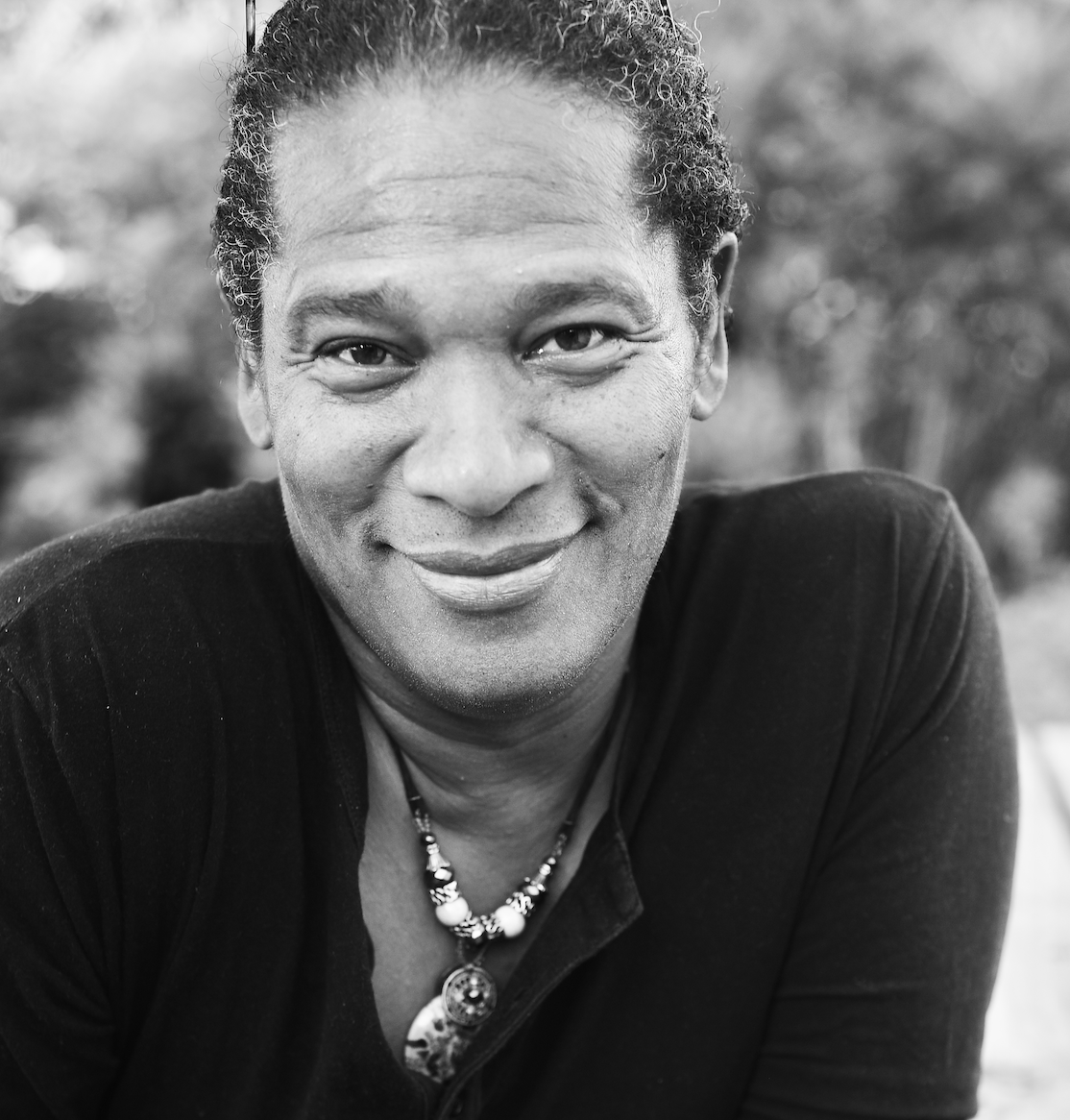
Georgio Sabino

Photo Credit by Robert Banks

With a Dash of Flair… Georgio Sabino III, Art, Education, and the Power of Telling Our Own Stories

The National Association of Black Journalists (NABJ) has long stood as a national and international yardstick for excellence in storytelling, truth-telling, and cultural accountability. Inspired by the NABJ Convention and Career Fair ethos, the “With a Dash of Flair . . .” project—developed in collaboration with the Cleveland Public Library (CPL), The People’s University, and Cleveland Digital—centers Black journalists, artists, historians, and cultural workers whose lived experiences shape Cleveland’s past, present, and future.

At the heart of this installment is Georgio Sabino III, an American artist, educator, photographer, and cultural documentarian, interviewed by Dr. Regennia N. Williams, Associate Curator of African American Community Partnerships, Programs, and Traveling Exhibitions and Distinguished Scholar of African American History and Culture at the Cleveland History Center of the Western Reserve Historical Society. The project was captured by Catherine Young, Cleveland Public Library Videographer, whose visual storytelling anchors the interview in both scholarship and accessibility.
(Video link included here in article)

As Dr. Nathan Carter once stated,

“I measure my work by what I think is a national, an international, yardstick.”

That philosophy resonates deeply throughout Sabino’s story—an artistic journey that refuses to play small, echoing the words of President Nelson Mandela:

“There is no passion to be found playing small— in settling for a life that is less than the one you are capable of living.”


Knowing Early: Art as Calling, Not a Hobby

Georgio Sabino III knew early—as early as 7th grade at Dominion Middle School—that he was an artist. This clarity was not accidental; it was instinctual. Art was not something he discovered later in life—it was something he recognized in himself.

His high school years were formative and complex. He spent some of his most joyful early years in Columbus at Whetstone High School, before relocating to Findlay High School, a move that proved unexpectedly transformative. Findlay offered one of the most comprehensive secondary arts programs in the region—spanning fashion design, interior design, jewelry making, alongside rigorous foundations in drawing, painting, ceramics, and design. That exposure reinforced Sabino’s belief that art was not only expressive—it was structural, intellectual, and professional.


Education as Foundation: Kent State, CWRU, and CIA

Sabino earned his Bachelor of Arts from Kent State University, an institution with deep historical ties to activism, design, and cultural inquiry. He later completed a dual master’s degree through a collaborative program between Case Western Reserve University (CWRU) and the Cleveland Institute of Art (CIA), focusing on Art Education.

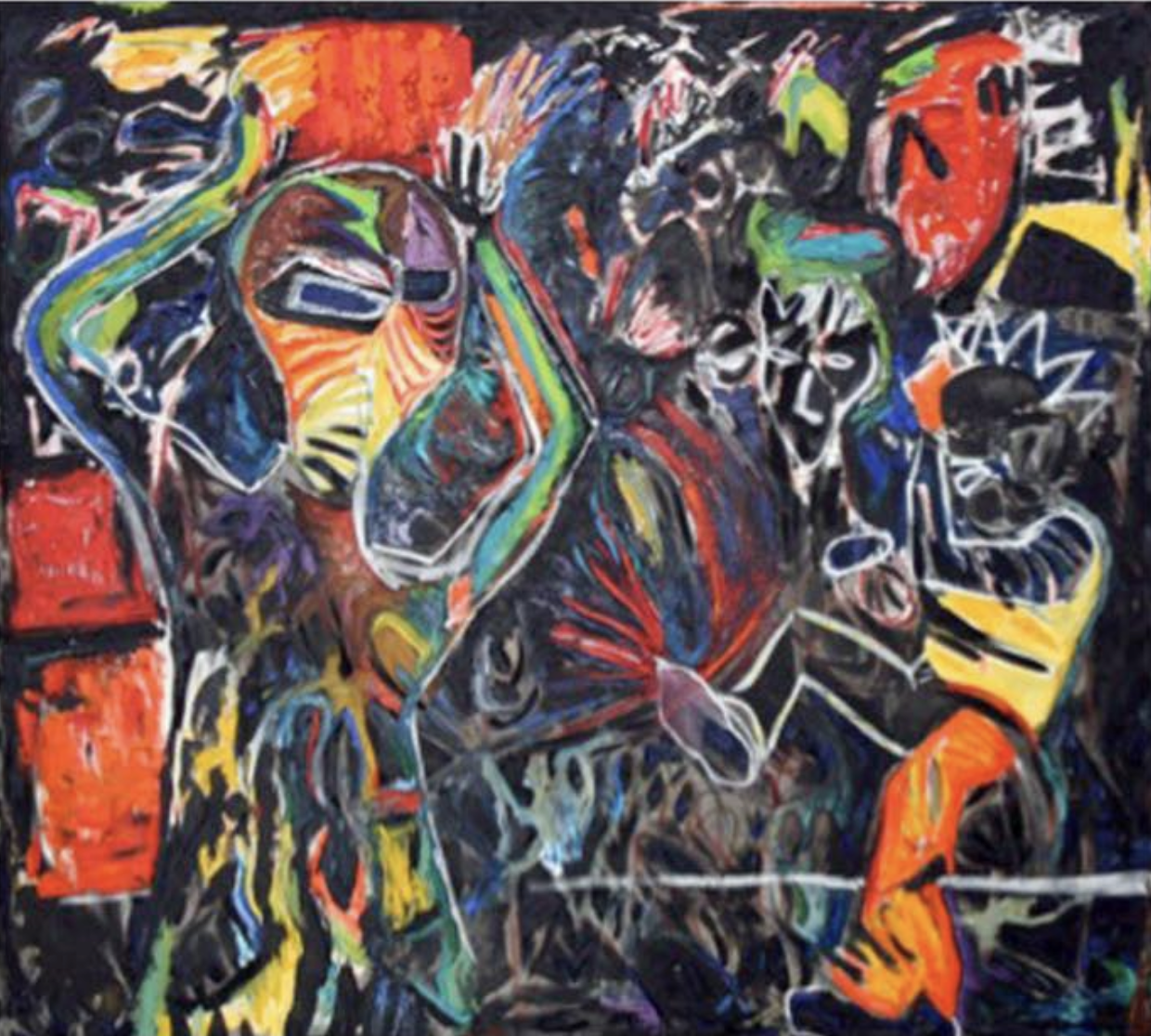
His academic and professional work converged in a powerful body of work titled “Educational Genocide,” a series that critically examines systemic inequities in education—particularly how curriculum gaps, resource deprivation, and cultural erasure disproportionately impact Black and marginalized communities. The work is both visual and conceptual, combining research, symbolism, and lived experience.

As Jean-Michel Basquiat once asserted:

“Art is how we decorate space; music is how we decorate time.”

Sabino’s work does both—occupying space with intention while marking time with truth.

Educational Genocide Series

6’x6′ Oil Painting by Georgio Sabino III


From Fabric to Fashion: New York, SoulFire, and Early Recognition

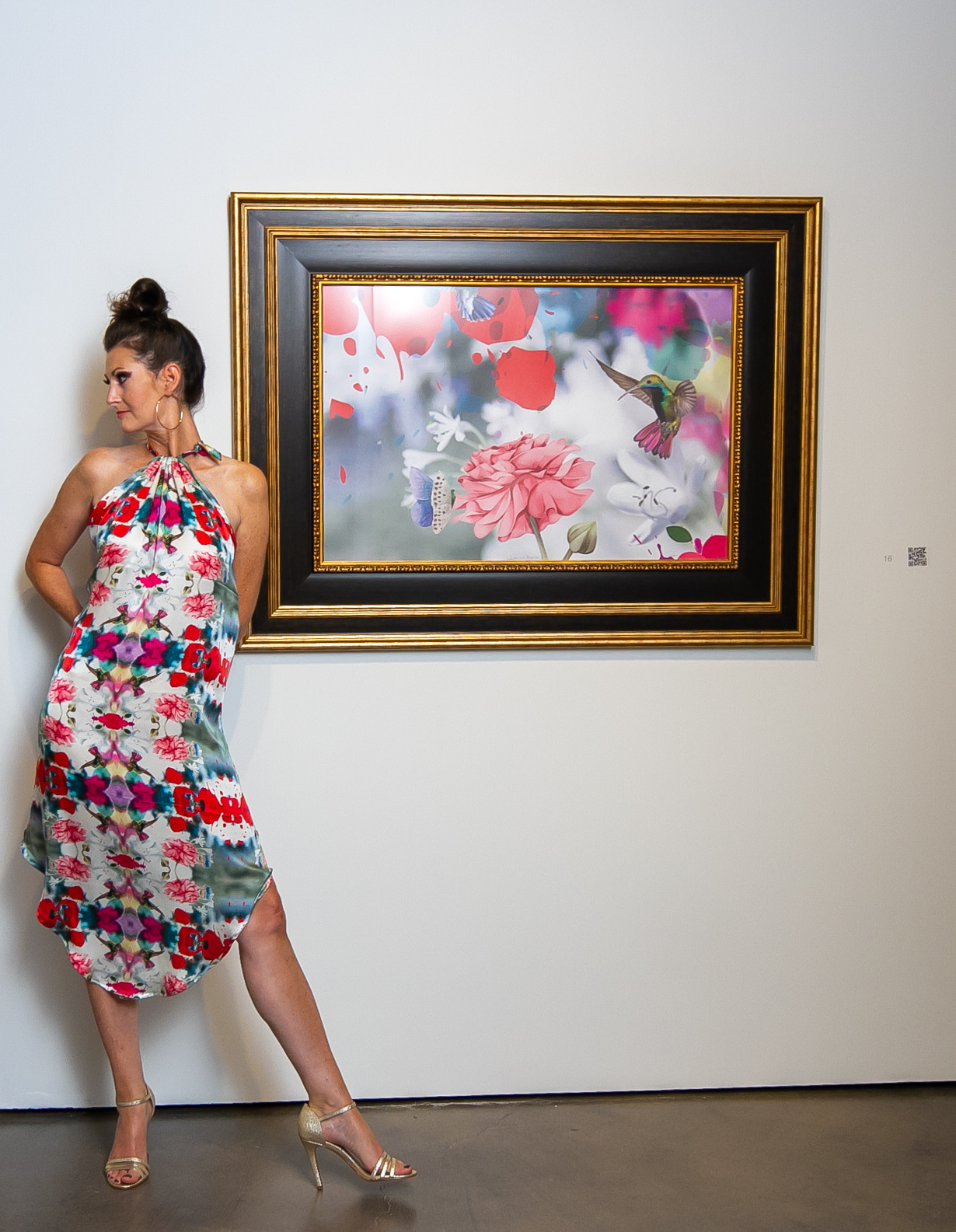
For a brief but influential period, Sabino and business partner Richard Johnson II lived in New York City, where his clothing and designs were housed at SoulFire, a creative space curated by Lisa and Charles Woodward. During college, he hand-painted silk fabrics for fashion courses and showcased his work in fashion shows across New York and New Jersey—a period he describes as exciting, experimental, and formative.

These experiences expanded his understanding of art as interdisciplinary—where fine art, fashion, performance, and community intersect.

Model: Kerry Bihler, Georgio Sabino painted silk dress and painting

Returning to Cleveland: Tower Press and a City Buzzing

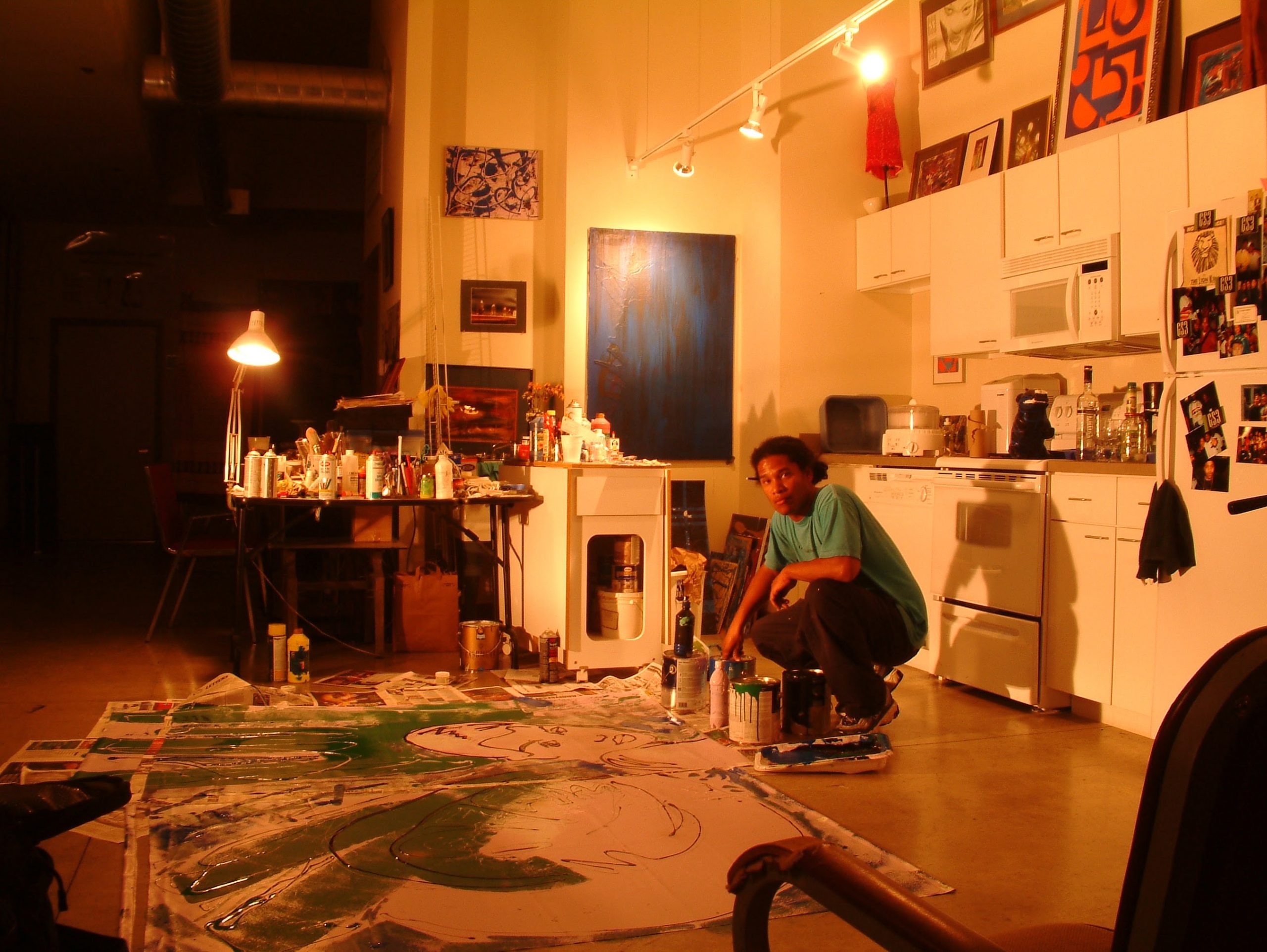
After returning to Cleveland, Sabino became part of a historic moment in the city’s arts revival. Under Mayor Michael R. White, he was among 20 artists awarded funding connected to a multi-million-dollar initiative to reinvigorate Cleveland’s cultural economy at Tower Press. The building became a creative epicenter, drawing tourists and residents every weekend.

Among the standout artists in the space were Hector Vega, Kathy Skerritt, and Bruce Conforti—figures whose work helped define the era. The city buzzed with exhibitions, conversations, and commerce—proof that investment in the arts yields cultural and economic returns.

TowerPress Building, Cleveland Ohio Artist Georgio Sabino Art Studio
Towerpress

Picking Up the Camera: A Self-Taught Evolution

It was during this Cleveland renaissance that Sabino picked up a camera, teaching himself photography from the ground up. While art was innate, photography required technical mastery—timing, light, shutter speed, and aperture—skills he layered onto his deep understanding of composition, already honed through painting and design.

Influenced by John Isaac of National Geographic and guided by mentorship and friendship from Bern Webb, Sabino set a bold goal early: to shoot as if every image were a magazine cover. That discipline led to publication in iconic outlets such as JET and Ebony, and eventually to touring nationally with Grammy Award–winning artists.


History in Motion: Sports, the White House, and Presidential Recognition

Sabino’s lens later captured historic sports moments, including the Ohio State Buckeyes’ first College Football Playoff National Championship (2015) and the Cleveland Cavaliers’ NBA Championship (2016)—both teams later honored at the White House.

In a defining moment, Sabino directly asked the Obama Administration for access, stating:
“I am a small business, but I want to cover this big story.”

The request was granted—twice.

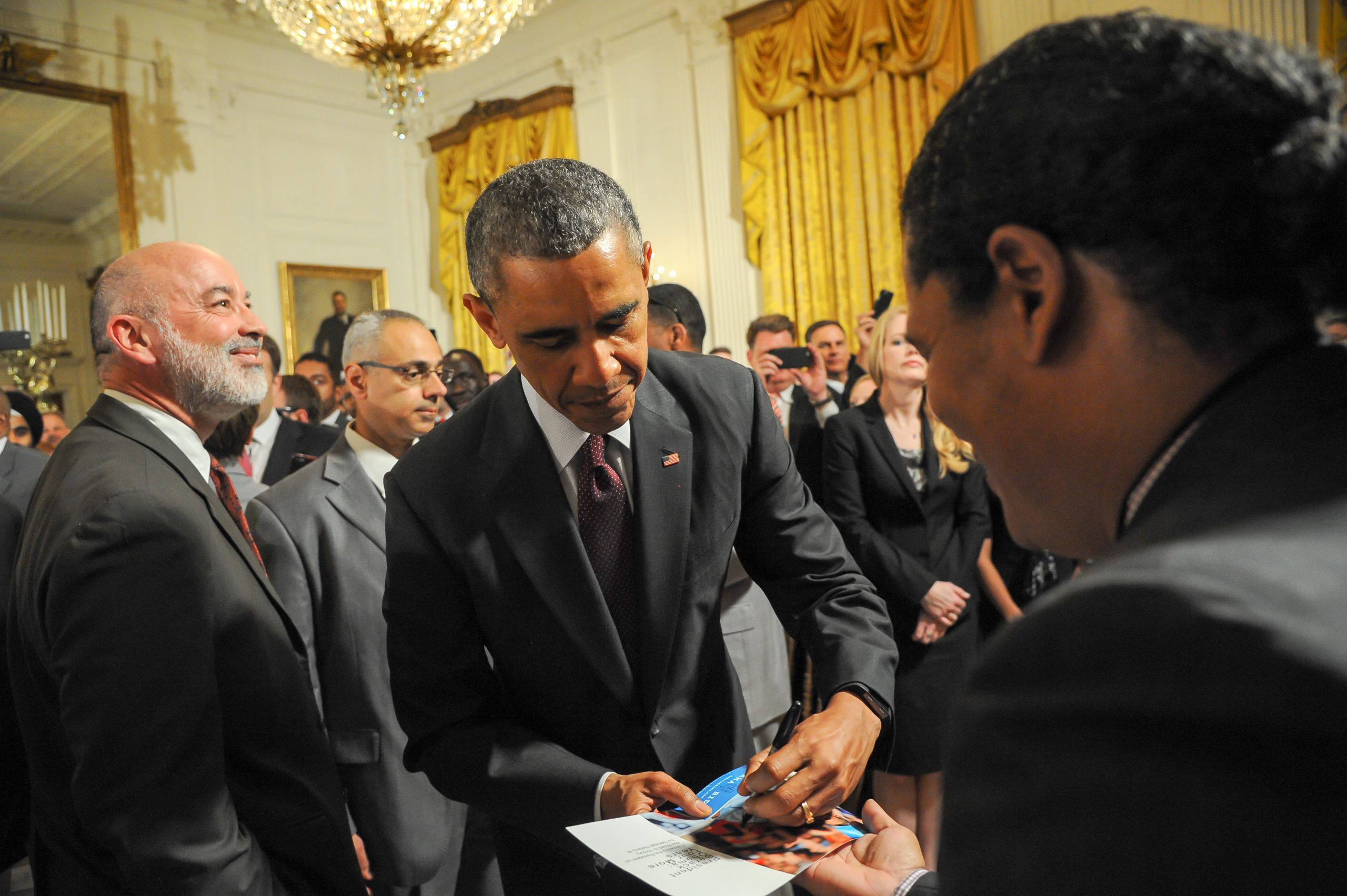
President Barack Obama personally signed Sabino’s artwork, recognizing his documentation of Obama’s journey from U.S. Senator through two presidential terms. Sabino has since published this body of work online, preserving it as both art and historical record.

President Obama signing Georgio Sabino art-work in the White House
PRESIDENT OBAMA signs a Ohio State University Buckeyes football team poster for GEORGIO SABINO III in honor of the team winning the first ever College Football Playoff National Championship The event took place in the East Room of the White House by @RickyFitchett

A Global Artist, A Local Responsibility

From photographing fashion in Paris, to traveling and working in Tanzania, Sabino’s career spans continents—but remains grounded in community. As contemporary artist Kehinde Wiley has stated:

“The question is not who is allowed to speak, but who is believed.”

Projects like “With a Dash of Flair…” answer that question by centering Black voices as authorities of their own narratives.


Watch, Reflect, and Engage

There is far more to Georgio Sabino III’s story than one article can hold. This interview is an invitation—to watch, to listen, and to engage with the living history of Cleveland through journalism, art, and education.

Watch the interview. Share your thoughts. Join the conversation.

GS3 — An American Artist.

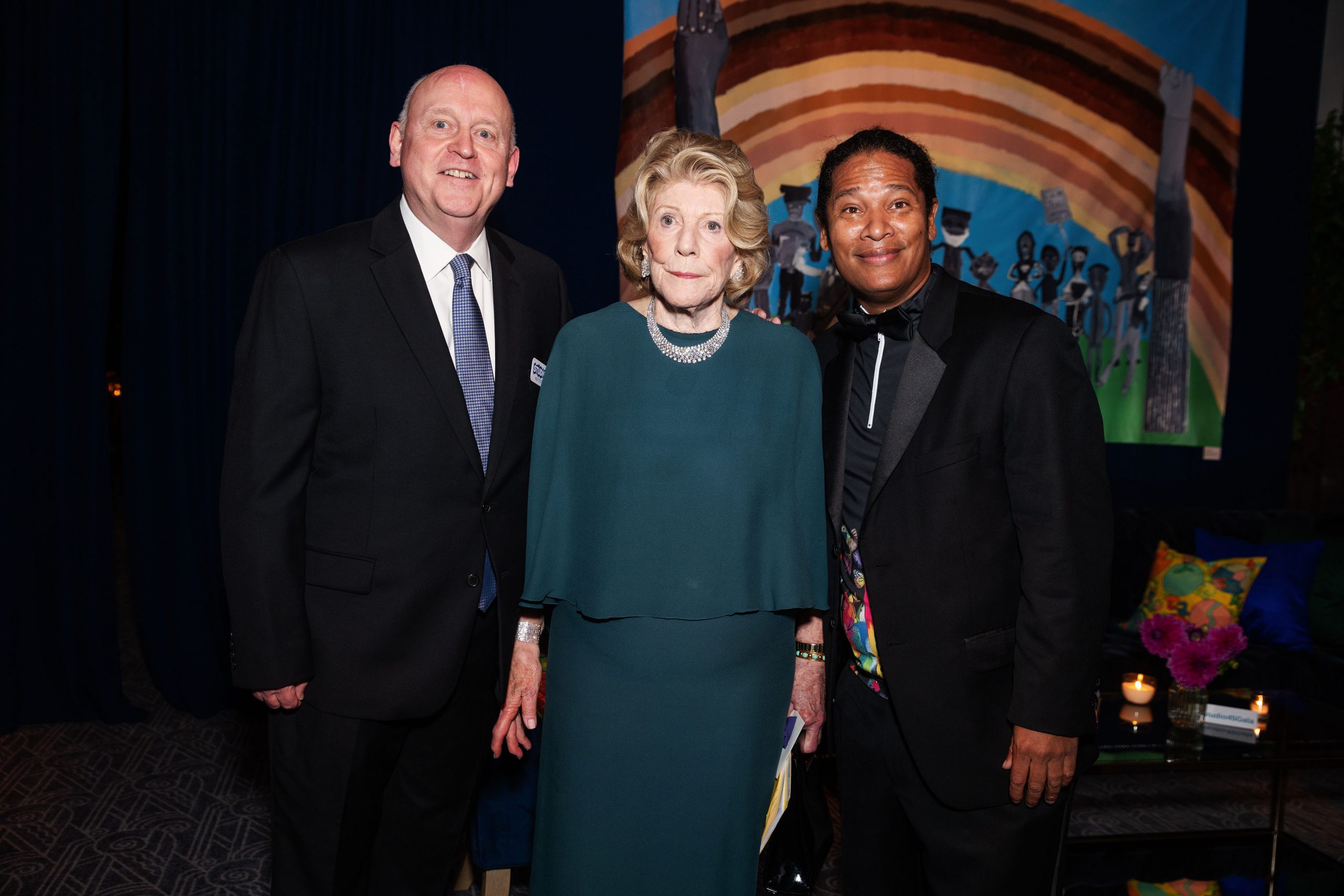
Right: Tom Cahill, Aggie Gund of the Gund Foundation, Left: Georgio Sabino at the Studio in a school 45th Gala in New York City.
Studio in a school 45th Gala

Right: Tom Cahill, Aggie Gund of the Gund Foundation, Left: Georgio Sabino at the Studio in a school 45th Gala in New York City.

Here is the movie The Joy of Arts Education: 45 Years of Studio in a School. Georgio has a movie to come out later from his reflection.

Jill Scott Music – – Photographed by Georgio Sabino III 

Jill
The latest powerhouse joining the ranks of the one-name “songstress sisterhood” a-la Sade, Whitney, Mariah, Erykah & Mary, is the tremendously talented Jill. Sans Scott, you still tremble at the name.

Jill. Her “Beautifully Human” tour graciously made its rounds to C-town in Spring, leaving neo-soul heads and hip-hoppers lucky enough to see & hear her perform, mesmerized. Her Cleveland connection was brief but breathtaking! An unusually warm March evening outside-gave way to a buxom stage backdrop inside called Scott. The songstress silhouetted behind the velvet Playhouse curtain, was patiently waiting to bless the stage with her beauty not to mention, bomb-ass vocals! The indoor venue enhanced the natural acoustics emitting from windpipes that would not soon be forgotten.

Opening for Ms. Jill, was a label-mate. A faceless, nameless warm-up act designed to settle the roaring crowd, and create a diversion for the early birds. A sultry saxophonist followed– blowing instrumental ballads of Scott’s past playlists. The familiar tunes turned the awaiting larvae in our souls into butterflies in our bellies! SHE’S coming.

With the energy of the sax man’s odes-du-Jill still lingering. SHE stole the stage. SHE commanded her followers to their feet, and we humbly obliged. SHE could’ve commanded the sun to re-shine after retiring for the evening-and it would have done so with haste! Just her smile, her larger-than-life presence could’ve made mountains feel minuscule. “You’re here. I’m pleased. I really dig your company-y … ” and we yours, Jill. We couldn’t wait to take the Long Walk tonight.

3 songs in, Ms. Scott encouraged the entranced crowd to come closer to the stage. Despite being a mere 7 rows back, I still fought my way to the 6th, then 5th trying to come ever closer to the enigma that is SHE. We forfeited comfy seats in 7, to stand in stilettos in row 2 the rest of the show. The painful trade was well worth it.

The most palatable part of her show sprung from the song “Do You Remember?” She talked to the crowd as if she was having a “sistah-girl,” down-home talk about love and pride and just “keepin’ it real”! Her monologue reminding black men to “remember” her & other black women– to say “hello” when they see a black woman vs. turning up their noses at us. The primarily black female crowd erupted in enthusiastic applause, cheers, and “You go, girls!” Jill was speaking for us, and did it with style, poise and conviction.

Rounding out the show was “Gettin’ in the Way”, “It’s Love” and “The Way”. When Jill finally left the stage, the audience made it clear that they felt slighted-screaming out “He loves me!” … “He loves me!” Pause. “He loves me!” Silence. It seemed like forever, but Mama didn’t disappoint– returning to quench the thirsty crowd’s cries with a low, melodic hum echoing from behind the curtain. The roaring crowd grew instantly mute. Then … the ultimate serenade. “He loves meeee especialll-lly different… ever-y … time … ” SHE emerged. Again. This time, more beautiful and glowing than the first. Shrieks and screams drowned out the very tune we’d been waiting all concert to hear! “He Loves Me” lasted long .. but could’ve spanned a lifetime for all we cared-a fitting song to end not only a romantic evening, but a soulful showing from a singer who just oozes “black love.”

She sincerely & graciously thanked all of her us for “feeling” her & showing so much love. It was well earned. What’s most impressive about the melody was her “down to earth” demeanor-despite being obviously BEAT from throat to feet! As she stood stage-front, sweaty, bottled water bobbing from a bent finger, grinning like a Cheshire cat on Quaaludes tears welled up in her eyes. The pure emotion flooding those beautiful brown windows, showed her soul. And it was real. It was real. We cried right along with her.

Jill Scott is a force to be reckoned with now, and for many decades to come. She’s bringing back the lost art of love, being IN love, GIVING love & just ENJOYING life in its simplest forms. Her music spoke to us. No it roared, hummed, and howled like a beautiful banshee! Keep doing what you do, girl. We’re listening.


Miss. January .J. Keaton

AM PA – 19 Action News

Cleveland Cavaliers Championship 24 x 36 Poster spends one night at the Cleveland Museum of Art

Cleveland Cavaliers Championship 24 x 36 Poster spends one night at the Cleveland Museum of Art. 

The Quantum Leadership Masterminds have a private event in the atrium at the Cleveland museum of art. Jeff Hoffman invited Georgio Sabino. 

Mr. Sabino shows his work of art to the Quantum Leadership Masterminds group. In this group they had a drum circle in addition to a wonderful guitarist. There were young millennial’s entrepreneurs from all over the country and one from Vancouver British Columbia. 

Jeff Hoffman spoke about entrepreneurship and his travels and is learning experiences from other entrepreneurial’s all over the globe. 

The Cleveland museum of art has a policy if artwork is brought into the building they have to process it for it to leave out. 

Sharon was the contact at the. Museum of Art shared that there were many admirers of the work. 

Mr. Sabino had to go through security and the employee entrance while being escorted with his work of art in order to leave the building. 

FRONT International Cleveland Triennial for Contemporary Art / Artist – Georgio Sabino III

FRONT International
Cleveland Triennial for Contemporary Art
#GeorgioSabino
#Artist,
#Ohio,
#NorthEasternOhio,
#NEO,
#GS3Photography,
#FRONTart,
#InternationalClevelandTriennial,
#ContemporaryArt,

Save

Save

Artists at 1900 Exhibit Bucks The Trend Of Economic Hard Times by Maria Gatmaytan

DATE: April 27, 2019

CONTACT: Christopher Yoshito

PHONE: (678) 592-8213

PRESS RELEASE

FOR: IMMEDIATE RELEASE THROUGH MAY 18, 2019

RE: Artists at 1900 Exhibit Bucks The Trend Of Economic Hard Times

GS3 Banner Art, Fashion & Wedding

CLEVELAND – While many Americans may look to the future with dubious uncertainty about their financial future, for area artists the issues of enough resources for housing, food and other basics are an ongoing way of life that are no different now than before the latest economic crisis.

In spite of these tough times, resident artist Georgio Sabino III and 15 of a collaborative group, The Artists at 1900, will have their works on exhibit at the Wooltex Gallery of the Tower Press Building at 1900 Superior Avenue in Cleveland during the weekend of May 16-17, from 9 a.m. to 7 p.m. on Saturday and Sunday from 1 to 6 p.m.

“It’s kind of interesting what’s happening [with the economy],” notes artist and entrepreneur Georgio Sabino III. “We [artists] didn’t really lose a lot, because we didn’t have anything to begin with… all we have is our art…”

Sabino will have more than his art during that weekend. He will have completed his master’s degree in art education from Case Western Reserve University and participate in the commencement activities with his niece, Paige Smith, who also will graduate with her bachelor’s degree in nutrition.

According to a December 2008 report by the regional Community Partnership for Arts and Culture, “From Rust Belt to Artist Belt: Challenges and Opportunities in Rust Belt Cities”, despite a struggling regional economy, artists have much to offer towards revitalization efforts. The assets that artists can offer include: migration to, and reconsideration of, inner cities; economic impact; a boost to property values; sweat equity; engaged citizenry; civic vitality; and, youth development and educational enrichment.

The latter is of special interest to Sabino, who hails from a large family and a bevy of youthful friends and relatives. Sabino particularly sees and feels the need to nurture young people to persevere towards a better future by getting a good education. In this regard, the CPAC report emphasizes “The need for an educated and creative workforce has never been greater than in the current economic era.”

Sabino’s first hand realization of this need to become a role model and to encourage youths stems from his own personal history as an African-American male of mixed ethnic (Creole) heritage and many learning challenges. In describing his birthright, he stated, “My momma was French Indonesian and Spanish, and my daddy African-American and Native American. But most everyone who looks at me sees just another Black man in America trying to make it…”

Having grown up in a range of living situations from the upper-middle class lifestyle of affluent suburbs, as well as being in middle class rural ‘small town USA’ and poorer urban neighborhoods, Sabino’s sense of the disparities in America between issues of race, class, access and privilege have been acutely observed. He credits his seventh grade art teacher with opening his mind to the possibilities that art could afford in expanding his world.

After graduating from the Kent State University Fine Art program in 1999, Sabino partnered with a friend to operate and sell their respective fashion lines at their own Soho boutique Soul Fire. He also had a fashion show at the Puck Building in New York City and other venues. Since then, Sabino’s other life experiences have encompassed work in corporate, celebrity and fashion photography; sales and marketing; community art education, voluntarism and mentoring; and substitute teaching in the Cleveland Heights-University Heights School District.

During his graduate studies at Case, Sabino compared his own learning process with that of students now impacted by the No Child Left Behind Act, from which the primary thematic influence of his master’s art thesis developed. Sabino’s exhibit will include this triptych symbolizing the experience of being a Black student in the American educational system. Sabino’s paintings reflect a lifetime of perseverance and the subsequent achievement of his educational goals to date.

One of Sabino’s mentors and contemporary artist Bruce Conforti observes, “The city of Cleveland should be looking forward to seeing the works of an emerging talented artist like Georgio. I believe in the saying, ‘The cream always rises to the top.’ Artists have to get out there and get seen, and people have to do their due diligence. In that regard, it doesn’t matter what the economy is. Good art sells and besides, it’s [art is] a good investment.”

Other artists whose work will be featured include: Anna Arnold, Robert Banks, Cushmere Bell, Bruce Biro, Danny Carver, Michael Greenwald, Mario Kujawski, Krisztina Lazar, Mike Levy, Billy Nainiger, Rachel Truitt, Hector Vega, Sequoia Versillee, Bob Walls and Jerome White. For more information, contact The Artists at 1900 via e-mail: info@artistsat1900.com or by phone at (678) 592-8213

written by Maria Gatmaytan

Blocks of Fire / Educational Genocide by Georgio Sabino 6'x6' 2009 Blocks of Fire / Educational Genocide by Georgio Sabino 6’x6′ 2009

GS3 Banner Art, Fashion & Wedding

updated