The Griot of the Circuit Board: TruthSerum’s Radical Craft
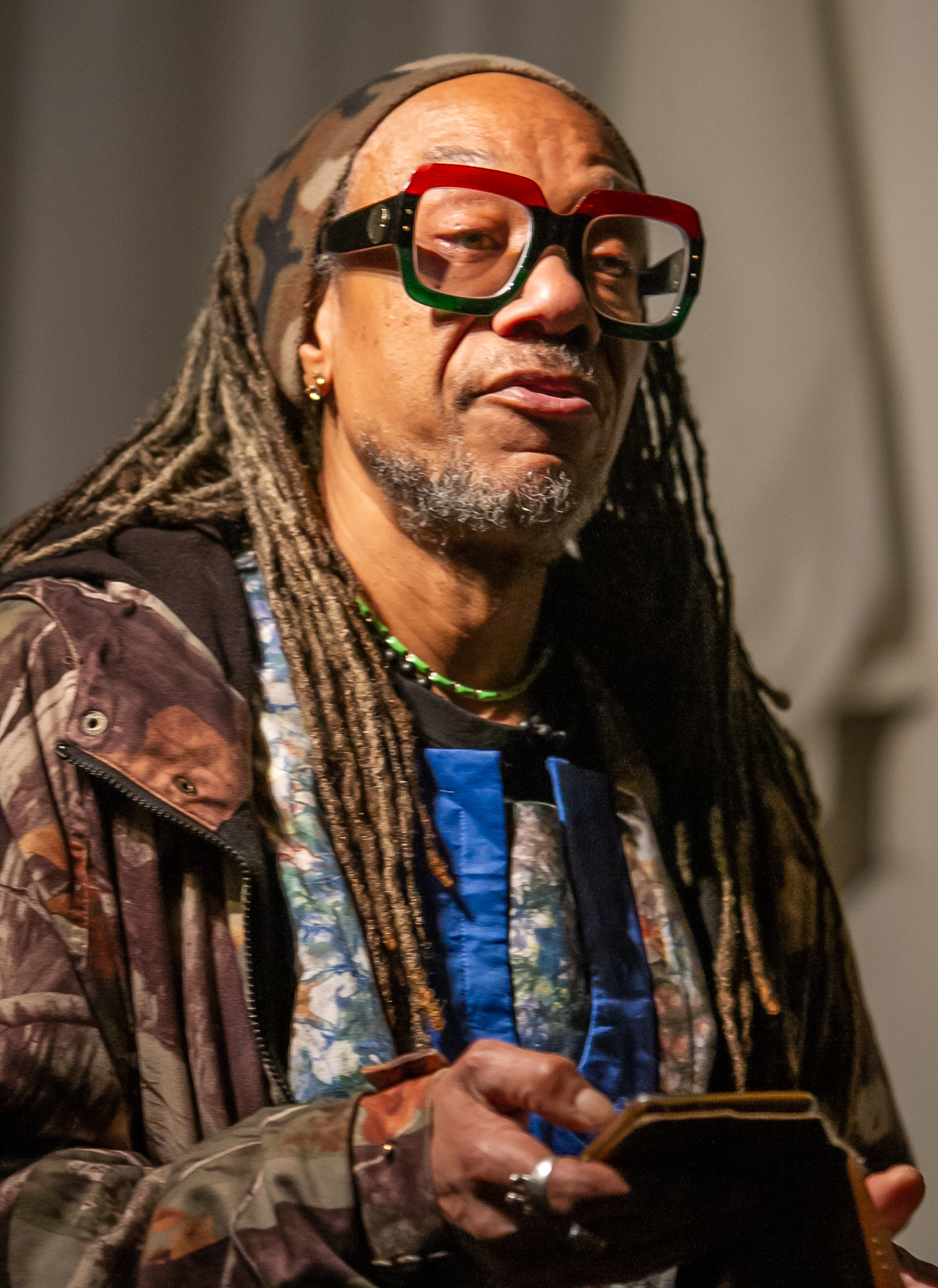
In the quiet, unassuming workshop tucked somewhere in the sprawl of Columbus, Ohio, there lives a man who does not wait for history to speak—he builds the instruments that carry its voice. His name is Michael Alan Cundiff, but you will never hear him answer to that. In this city, in the small but fierce constellation of artists who refuse to compromise, he is known only as TruthSerum.
To understand TruthSerum is to understand the architecture of rebellion. Born in Anchorage, Alaska—where survival demands ingenuity—he migrated to the heart of the Midwest, absorbing the grit of Mifflin High School before taking his restless intellect to The Ohio State University. But academia was never the destination; it was a layover. His real education began when he started asking a simple question: What does Black sound like when it refuses to be borrowed?
The answer, for TruthSerum, lies in the wood, the calabash, the carefully tensioned membranes, and the hand-forged tines of African instruments. While the world chases mass-produced guitars and factory-line synthesizers, he works in a different lineage. He is a builder, a repairer, a preserver, and an innovator of instruments that carry the DNA of the continent: kalimbas (thumb pianos) whose metal tines sing with the resonance of southern African tradition; djembes and talking drums whose voices shift pitch under a pressed elbow; ngonis and koras—string instruments whose ancestry stretches back to the Mandinka empires, their calabash resonators whispering stories older than the blues.
TruthSerum does not merely play these instruments. He fabricates them. Using a fusion of technical knowledge, deep research, and an almost obsessive reverence for authenticity, he builds, maintains, and tunes these vessels with the precision of a conservator and the soul of a griot. He understands that a kalimba is not a novelty; it is a philosophical technology—a tool for memory, for ceremony, for unapologetic Black joy and Black lament. When he repairs a cracked drum shell or re-tensions a goat hide, he is not fixing an object; he is restoring a line of communication that colonialism tried to sever.
And when amplification is required—because the revolution, after all, deserves to be heard—TruthSerum provides that too. He designs and configures sound systems that honor the acoustic integrity of these instruments while ensuring that their frequencies cut through the noise of a world that often prefers them silent.
The Word Is Truth
But the instruments are only half the story. If his hands build the vessels, his voice fills them.
TruthSerum is a poet of the uncompromising kind. His work does not whisper; it testifies. His poetry moves through the tradition of the Last Poets, of Gil Scott-Heron, of every Black artist who understood that art without confrontation is merely decoration. His themes are raw, unapologetically Black, and laser-focused on the urgency of Black Lives Matter—not as a slogan, but as a lived, breathing reality in the streets of Columbus and beyond.
His poem “My Black I Beautiful” stands as a cornerstone of his artistic manifesto:
“My Black is BeautiFULL because my heritage is rich and full of dynastic Queens and Kings spanning continents and ages. My Black is beautiful because of its diverse cultural aspects, unique languages, arts, musical instruments & historical accomplishments. My black is beautiful because it is unique, always copied (often envied). My black is beautiful because it is strength, adaptability & endurance throughout the centuries of life on this planet. My black is beautiful just because!”
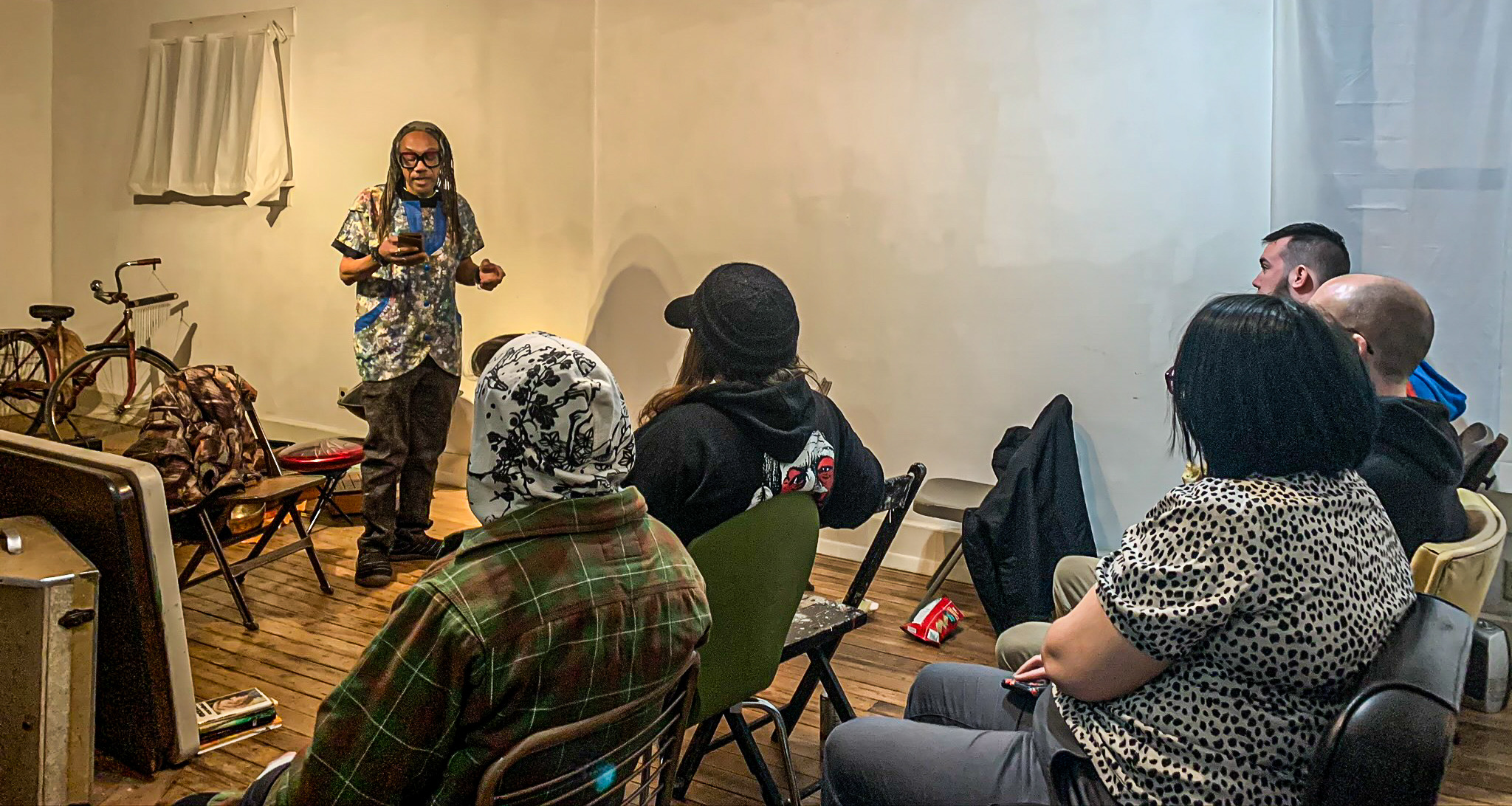
This is not poetry designed for quiet chapbook readings in coffee shops where people nod politely. This is a declarative act. It is a rebuttal to every erasure, every microaggression, every stolen rhythm repackaged for suburban consumption. When TruthSerum performs this piece—often accompanied by a kalimba he built himself, amplified through a rig he tuned with his own hands—the room stops being a room. It becomes a sanctuary. It becomes a witness.
The Synthesis
What makes TruthSerum a singular figure in Ohio’s artistic landscape is the unity of his craft and his message. He does not separate the instrument from the poem. He understands that the talking drum was once used to transmit messages across dense forests—and that today, his voice, amplified through circuits he understands intimately, serves the same purpose. He teaches not just technique but lineage. When he instructs a student on the method of playing a kora, he is also teaching them the history of the Mande hunters who first strung its twenty-one strings. When he tunes a djembe, he is reminding them that rhythm was the original telegraph—resistance encoded in syncopation.
Originally from the wilds of Alaska, tempered by the halls of OSU, and rooted in the community of Mifflin and Columbus, TruthSerum represents something rare: an artist who builds his own tools, speaks his own truths, and refuses to let Black art be sanitized for mainstream comfort. He is a fabricator of African instruments in a city that often overlooks their existence. He is a poet who uses the word “Black” like a drum strike—unflinching, resonant, necessary.
In a cultural moment that loves to appropriate aesthetics while ignoring the people who created them, TruthSerum is a corrective. He does not ask permission. He does not wait for validation. He builds. He writes. He amplifies.
And if you ever find yourself in Columbus, standing in the presence of a kalimba he crafted, hearing a poem that refuses to let you look away, you will understand: this is what truth sounds like when it is given its proper instrument.